You may have learned to smile without showing your teeth, started chewing on one side of your mouth, or simply gotten used to the empty space left by a missing tooth.
But just because you have adjusted to it does not mean your mouth has. A missing tooth can affect how you bite, speak, chew, and feel about your smile.
The good news is that replacing it does not always mean undergoing implant surgery. A dental bridge is another reliable option that can fill the gap using a fixed replacement tooth supported by neighbouring teeth or dental implants.
If you are considering treatment with a dentist in West Windsor NJ, understanding when a dental bridge makes sense can help you choose an option that fits your oral health, comfort, and long-term goals.
What Exactly Is a Dental Bridge?
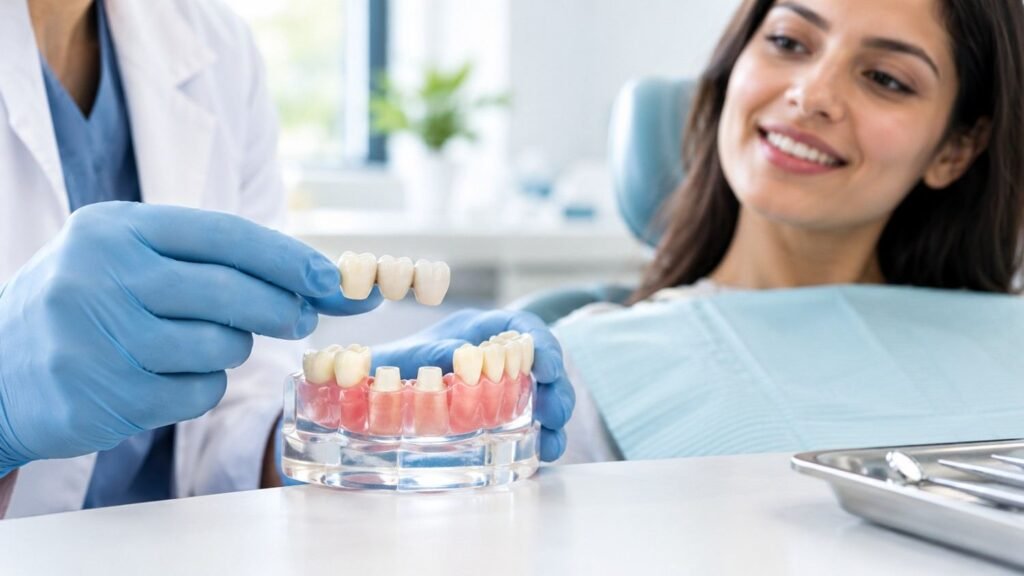
A dental bridge is a fixed dental restoration designed to replace missing teeth. It fills the gap with an artificial tooth, known as a pontic, supported by neighbouring natural teeth or dental implants.
Unlike removable partial dentures, a traditional dental bridge stays in place and is not taken out for everyday cleaning.
A conventional dental bridge generally consists of:
- Pontic: The artificial tooth that fills the missing space.
- Abutment teeth: The natural teeth that support the bridge.
- Dental crowns: Protective coverings placed over supporting teeth to hold the bridge securely.
Dental bridges can be customized to complement the colour, shape, and appearance of your natural teeth. They also help restore chewing function and prevent neighbouring teeth from drifting into the empty space.
What Are the Different Types of Dental Bridges?
Not every missing-tooth situation requires the same restoration. Your dentist may recommend different bridge designs depending on the location of the gap, the condition of surrounding teeth, and your treatment preferences.
- Traditional dental bridge: Uses crowns on the teeth on either side of the gap to support one or more artificial teeth. It is commonly used when healthy supporting teeth are available.
- Cantilever bridge: Uses support from a natural tooth on only one side of the missing space. It is suitable only in selected situations because the design can place additional forces on the supporting tooth.
- Maryland bridge: Uses small wings bonded to the backs of neighbouring teeth instead of full crowns. It may be considered for certain front-tooth replacements where appearance and reduced tooth preparation are priorities.
- Implant-supported bridge: Uses dental implants rather than natural teeth for support. It may be appropriate when several neighbouring teeth are missing, and suitable implant placement is possible.
The right design depends on your dental examination, bite, and long-term treatment goals.
When Is a Dental Bridge a Better Choice Than a Dental Implant?
A dental bridge may be a more practical choice when you want a fixed replacement without undergoing implant surgery. However, implants may offer advantages in other situations, particularly when preserving neighbouring natural teeth is a priority.
A bridge may be worth considering when:
- The teeth beside the gap already have large fillings or require crowns.
- You prefer to avoid implant surgery.
- Your jawbone or medical circumstances make implant treatment less suitable.
- You want a relatively straightforward fixed restoration.
- Your dentist determines that the supporting teeth are strong enough.
Dental implants replace the missing tooth root, while conventional bridges rely on neighbouring teeth for support. This is an important difference when deciding between treatments.
| Consideration | Dental Bridge | Dental Implant |
| Support | Natural teeth or implants | Jawbone |
| Surgery | Usually not required for a conventional bridge | Surgical placement required |
| Treatment time | Often completed over a few weeks | Usually takes several months |
| Neighbouring teeth | May require preparation | Usually remain untouched |
| Bone support | Does not replace the tooth root | Helps maintain bone through functional loading |
| Maintenance | Requires cleaning underneath the bridge | Requires ongoing implant and gum care |
Neither option is automatically better for everyone. A dentist West Windsor, NJ, can assess your circumstances and explain which approach offers the most appropriate balance of function, appearance, and long-term maintenance.
What Happens During a Dental Bridge Procedure?
Getting a traditional dental bridge generally involves two main appointments, although the exact process depends on the restoration and your dental needs.
- Examination and treatment planning
Your dentist examines the missing-tooth area, checks the neighbouring teeth, and evaluates your gums and bite. X-rays or other imaging may be recommended to assess the supporting structures.
- Preparing the supporting teeth
If a traditional bridge is appropriate, the supporting teeth are carefully reshaped to make room for the crowns. Local anesthesia is used to keep you comfortable during the procedure.
- Taking dental impressions or digital scans
Your dentist records the shape and position of your teeth so the bridge can be custom-made. A temporary restoration may be placed while the final bridge is prepared.
- Fitting the permanent bridge
At the next appointment, your dentist checks the fit, bite, and appearance before securing the final restoration.
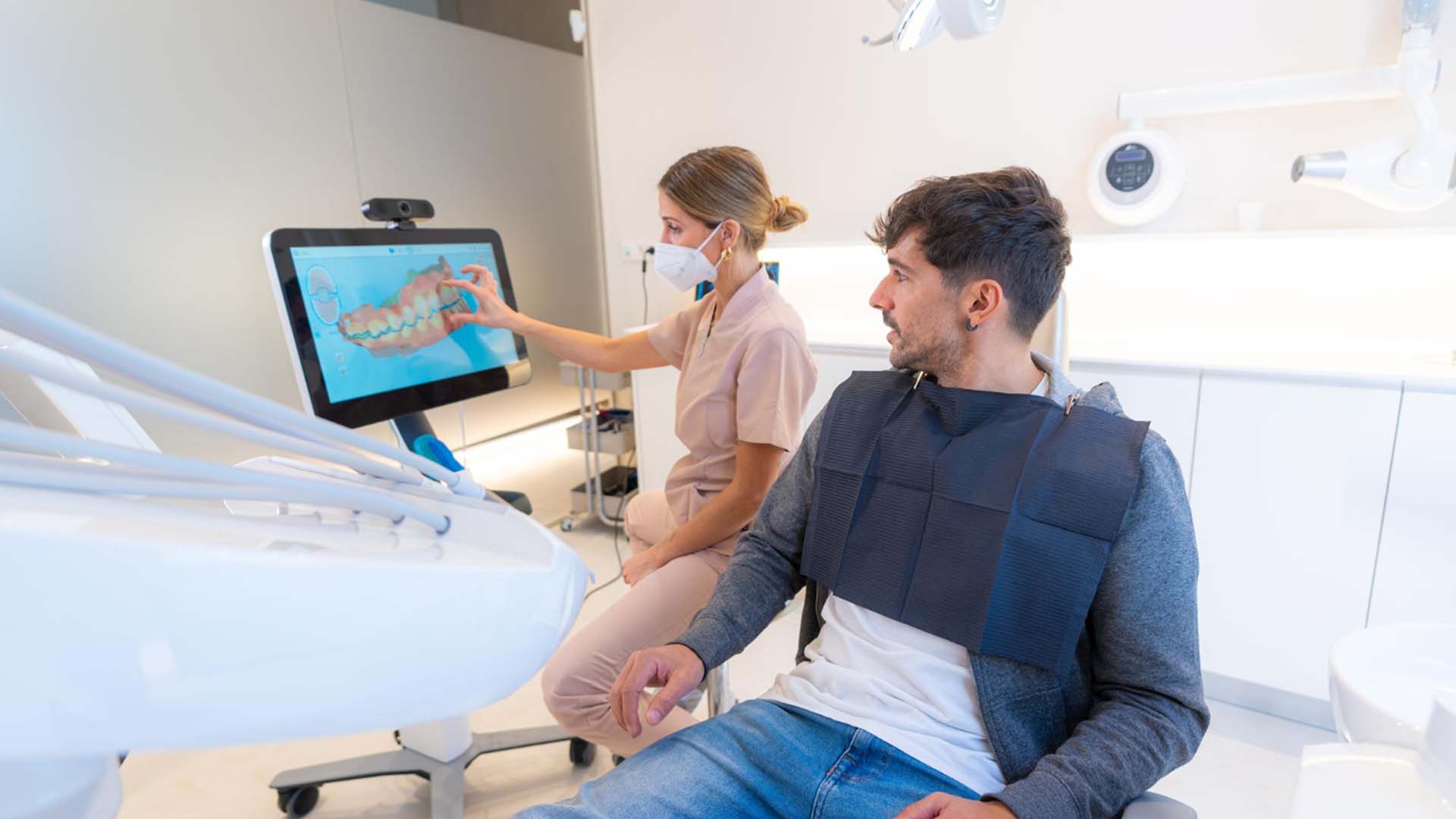
Some practices use digital technology to design and manufacture suitable restorations, although not every bridge can be completed in a single visit.
How Long Does a Dental Bridge Last?
A dental bridge can last many years with proper care, but it is not a lifetime restoration. Its lifespan depends on the materials used, the condition of supporting teeth, your bite, and your daily oral hygiene.
The average lifespan is approximately five to 15 years, although some bridges last longer with appropriate maintenance.
To protect your investment:
- Brush twice daily with fluoride toothpaste.
- Clean underneath the bridge every day.
- Use floss threaders or interdental brushes as recommended.
- Avoid chewing ice or excessively hard objects.
- Attend regular dental examinations and professional cleanings.
Your supporting teeth still need protection from cavities and gum disease. Keeping the bridge clean is just as important as caring for your natural teeth.
Frequently Asked Questions About Dental Bridges
- Is getting a dental bridge painful?
The procedure is generally performed using local anesthesia to keep you comfortable. Some sensitivity or mild soreness may occur afterwards, particularly around prepared teeth.
- Can a dental bridge replace more than one missing tooth?
Yes. Depending on the number of missing teeth and the available support, a bridge can replace multiple teeth. Longer bridges require careful evaluation to ensure the supporting structures can handle the chewing forces.
- Can I eat normally with a dental bridge?
A dental bridge restores much of your chewing ability. You may need some time to adjust, and your dentist may recommend avoiding particularly hard or sticky foods.
- Is a dental bridge better than a partial denture?
A bridge is fixed in place, while a partial denture is removable. Your choice depends on the number of missing teeth, supporting tooth health, budget, and personal preferences.
- Do dental bridges look natural?
Yes. Modern dental materials can be customized to match the appearance and colour of surrounding teeth. Your dentist will consider the position of the missing tooth and your smile when planning the restoration.
- Can a dental bridge become loose?
Yes. Changes in supporting teeth, cement failure, or damage can cause a bridge to loosen. Contact your dentist if you notice movement, discomfort, or changes in your bite.
- How do I clean underneath a dental bridge?
Use a floss threader, specialized bridge floss, or an interdental brush to clean underneath the artificial tooth. Your dental team can demonstrate the most suitable technique.
Restore Your Smile With Thoughtful Dental Care at Smile Flossophy
Replacing a missing tooth is not simply about filling an empty space. It is about finding a solution that helps you eat comfortably, smile confidently, and maintain your oral health.
At Smile Flossophy, we believe every patient deserves clear explanations, personalized treatment recommendations, and care without judgment.
Whether you are exploring dental bridges, dental implants, or other restorative options, our approach focuses on helping you understand the benefits, limitations, and possibilities before making a decision.
We offer a range of dental services, including general dentistry, cosmetic dentistry, implant dentistry, orthodontics, sedation dentistry, endodontics, periodontics, oral surgery, emergency dentistry, and All-on-4 full-arch restoration.
If you are looking for a dentist in West Windsor, NJ, we invite you to make your smile and comfort part of the conversation. At Smile Flossophy, we want every dental decision to feel informed, personal, and right for you.